
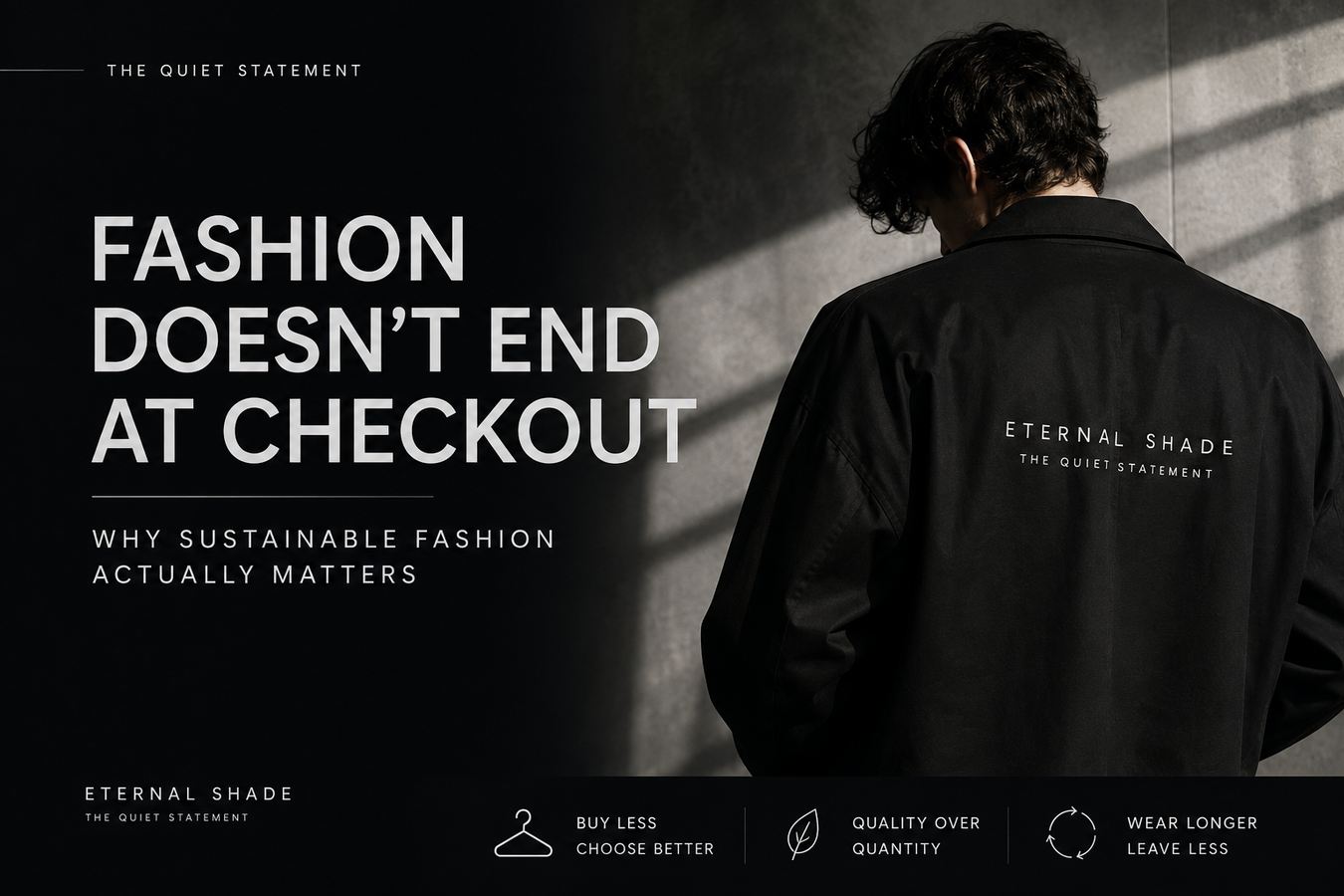
Fashion feels personal. What it leaves behind isn’t.
Most of us never think about where a piece of clothing goes after it leaves the store. We think about the fit, the color, how it looks in the mirror. What we don’t think about is what it’s made of, what it took to make, or what happens once we’re done wearing it. That’s the part of sustainable fashion nobody talks about at the checkout counter because it’s the least glamorous part of the industry.
The Plastic Hiding in Your Closet
A lot of clothing today isn’t made from natural fiber at all. Polyester, nylon, acrylic these are plastics, just woven instead of molded. They got popular because they’re cheap, light, and durable. But every wash cycle sheds microscopic fibers from these fabrics, and a large share of that ends up in our water systems. Textiles are a real, measurable source of the micro plastic pollution entering our oceans every year. Something hanging quietly in your closet is tied to a much bigger environmental story than most people realize.
Fast Fashion Isn’t Just About What We Buy It’s How Much
Trends move fast now. Something new shows up online, we buy it, and within weeks it already feels dated. That cycle keeps repeating and it’s less about people loving fashion, more about clothing becoming disposable. Cheap, fast, forgettable. This is the core problem behind fast fashion waste garments are being made to be discarded, not kept. A low price tag doesn’t mean a garment is harmless. Someone paid for it through water, through energy, through the chemicals used to process it, through the waste it eventually becomes.
Every Garment Has a Back story
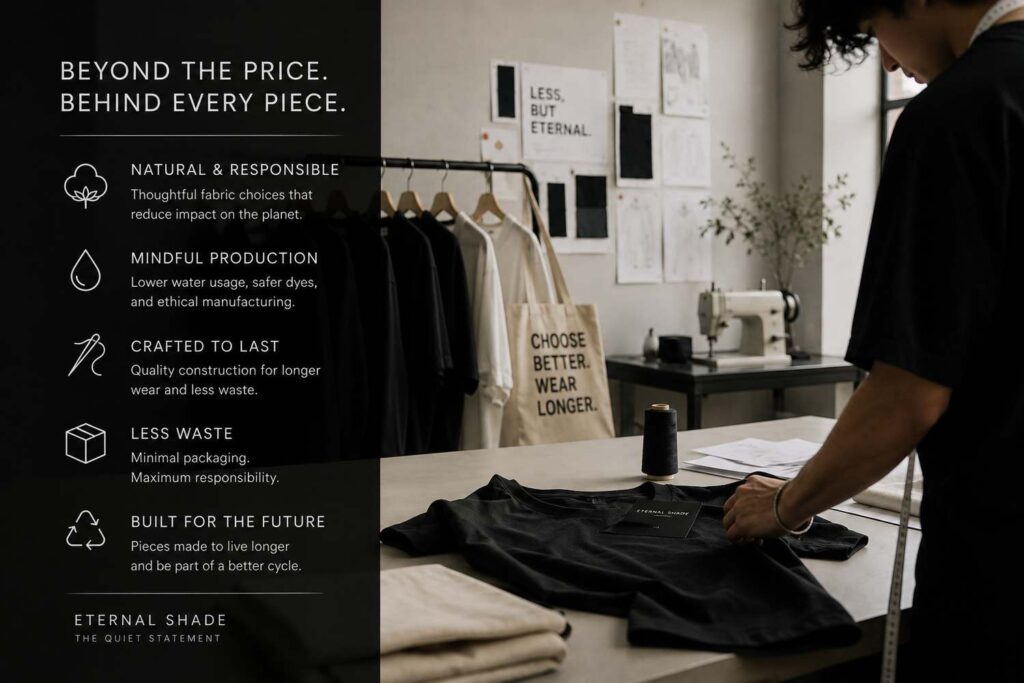
By the time a T-shirt hits a rack, it’s already gone through fiber production, dyeing, finishing, cutting, stitching, packaging, and shipping. Every stage costs resources. So the real question isn’t “how cheap is this.” It’s “what did it actually take to make this.”
Cheap Isn’t the Same as Good Value
A ₹500 shirt doesn’t feel like a real decision. But ten ₹500 shirts is ₹5,000 and ten more things crowding a closet you’re not wearing. The problem was never the number on the tag. It’s the relationship between price, quality, how often you actually wear something, and what happens when you don’t anymore. A piece that costs more but lasts years will always out value something bought cheap and forgotten in a month. This is the whole logic behind investing in sustainable street wear instead of trend chasing basics.
Buy Less. Mean It More.
This isn’t about guilt tripping anyone out of buying clothes. It’s about buying with intention instead of impulse. Buy something because you actually want it not because it’s trending this week. Buy pieces that work with what you already own. Choose quality when you can. Wear things repeatedly. Take care of them. And when you’re done, don’t just throw it away pass it on, resell it, let it live another life. The most sustainable piece in your closet usually isn’t the one with a sustainability label on it. It’s the one you keep reaching for.
Slow Fashion Is a Discipline, Not a Trend
This is the whole idea behind slow fashion and honestly, it’s the same mindset we build everything on at Eternal Shade. Not: more, faster, cheaper, disposable. But: better, fewer, longer, meaningful.That shift feels small in a single closet. Multiplied across a lot of people making the same call, it adds up to something real. Style doesn’t have to come from constantly buying. It can come from restraint.
Stop Dressing for Right Now
Trends are built to make you want something today and regret it in three months. Timeless pieces ask a different question: will I still want this in five years? That question is where real style starts not in chasing every drop, but in understanding what a piece actually costs, to make, to wear, to eventually let go of. Once you see that, buying stops feeling automatic. Before your next purchase, ask yourself:
– Do I actually need this?
– Will I wear it often?
– Will it hold up?
– What happens to it when I’m done?
The Quiet Statement
The future of fashion isn’t about owning more. It’s about choosing better. A closet doesn’t need to be full to say something. It doesn’t need a hundred pieces to reflect who you are. A few pieces you actually believe in will always say more than a pile of things you don’t. Fashion is temporary. What you leave behind doesn’t have to be.
Leave a Reply